Features
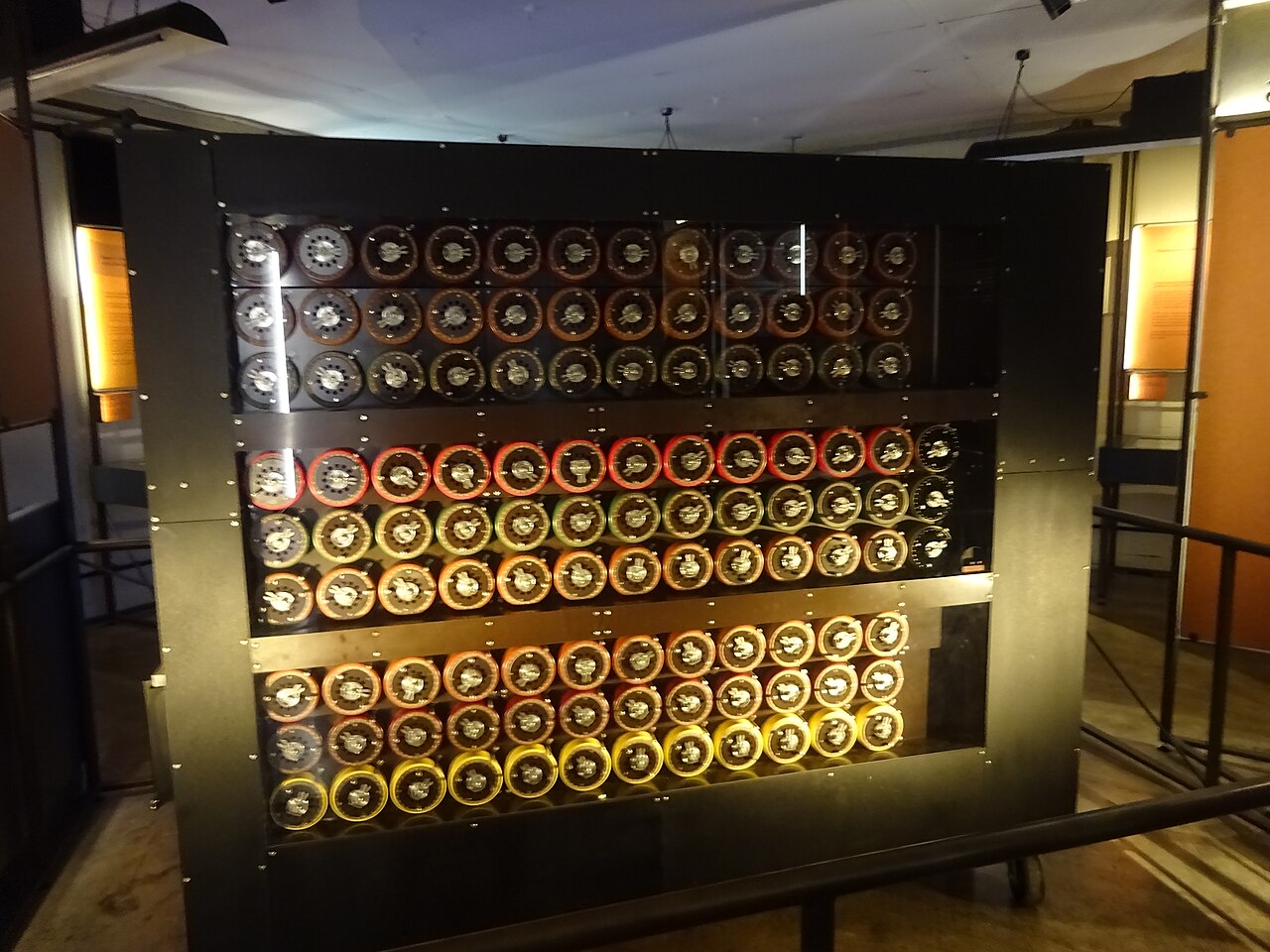
The real machine behind The Imitation Game was called Victory
At a glance
The film gives one man one machine named Christopher; the real story has a machine called Victory and nearly ten thousand people behind it.
About the publisher · Editorial standards and corrections
Ask AI about this story
On this page
In The Imitation Game (2014), Alan Turing builds a codebreaking machine and names it Christopher, after a school friend who died young. It is one of the film's most moving scenes, and it did not happen. The first British bombe, the machine that searched for the daily settings of the German Enigma, was called Victory. It went into service at Bletchley Park in March 1940.
One design, many hands
Turing's design built on the Polish "bomba", which Polish cryptologists had shared with Britain and France in 1939. Victory turned out to be too slow. Gordon Welchman, a fellow mathematician, proposed the "diagonal board", which made the search far more efficient, and the second machine, Agnus Dei, used it from August 1940. The engineering and construction were done by Harold "Doc" Keen and the British Tabulating Machine Company in Letchworth, which went on to build more than 200 bombes.
Ten thousand people, mostly women
The film shows a handful of people. At its peak in January 1945, Bletchley Park and its outstations employed close to 10,000 people, and about three in four were women. By the end of the war, around 1,676 members of the Women's Royal Naval Service, together with 263 RAF men, were running 211 bombes around the clock.
- Machines found likely key settings; people tested them, broke the messages and turned them into intelligence.
- Staff signed the Official Secrets Act, and most kept quiet for decades.
- Formal recognition, in the form of a commemorative badge, only arrived in 2009.
The film is worth watching. Just remember that one name on screen stands in for thousands in real life.